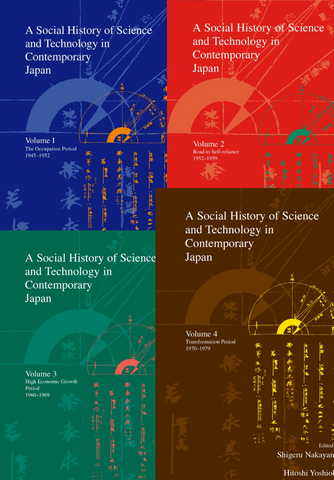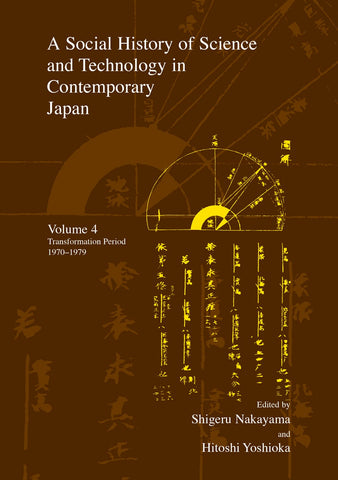
Social History of Science and Technology Vol.1
Many In Stock
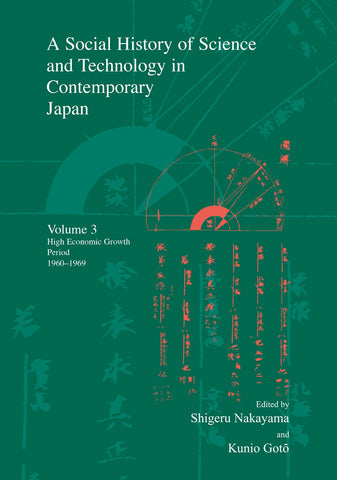
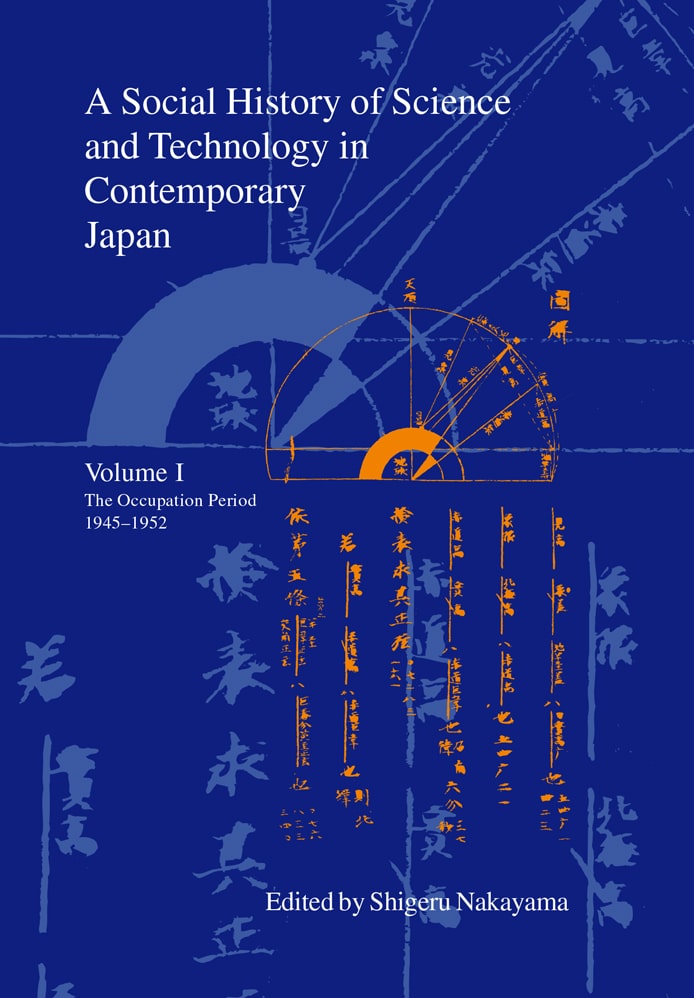
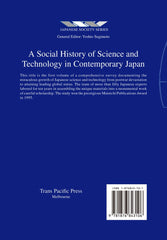
Volume 1 of the four-volume A Social History of Science and Technology in Contemporary Japan examines the occupation years from 1945 to 1952, when Japan's scientific and technological institutions underwent profound transformation under Allied rule. It explores how demilitarization, democratization, and sweeping institutional reforms reshaped the nation's scientific community, research system, higher education, and industrial infrastructure, laying the foundations for postwar reconstruction.
The volume covers topics including the dismantling of wartime science and military research, investigations into the atomic bombings, the reorganization of universities and research institutions, the establishment of new scientific organizations, reforms in public health, telecommunications, and the patent system, and the emergence of democratic movements among scientists and engineers. Written by more than fifty leading Japanese historians of science and technology, this English edition makes a landmark work of Japanese scholarship available to an international audience for the first time. It is an essential resource for researchers and students of the history of science, Science and Technology Studies (STS), Japanese Studies, occupation studies, and postwar East Asian history.
Awards
Mainichi Publications Award (1997)
About Editors and Authors
NAKAYAMA Shigeru was a leading Japanese scholar specializing in the history of science. He was Professor Emeritus at Kanagawa University and Vice-Chairman of the International Academy of the History of Science. In 1945, he joined the Hiroshima High School Science Class (now Hiroshima University), and was exposed to the atomic bomb at his residence. In 1948, he moved to Tokyo to join the Department of Astronomy, Faculty of Science, University of Tokyo, and upon graduating in 1951 was employed by the publisher Heibonsha. In 1955, he joined the Graduate School of Harvard University as a Fulbright Scholar and was awarded a PhD in 1960. After returning to Japan, he served in the Faculty of Arts and Sciences of the University of Tokyo as Lecturer, and later went on to become Assistant Professor. He retired from the University of Tokyo in 1989 and became Professor at Kanagawa University. His career produced a wide range of research achievements, including in the history of science and technology in China and Japan, the history of universities and the social history of science. He passed away in 2014.
Table of contents
Preface to the English Edition
Preface
Introduction
Part I: GHQ and Demilitarization Policy
1 The Scientific Intelligence Survey: The Compton Survey
2 Investigations of the Effects of the Atomic Bomb
3 Destruction of Cyclotrons
4 Demilitarization and the Peaceful Remobilization of Manpower
Show More >
Preface to the English Edition
Preface
Introduction
Part I: GHQ and Demilitarization Policy
1 The Scientific Intelligence Survey: The Compton Survey
2 Investigations of the Effects of the Atomic Bomb
3 Destruction of Cyclotrons
4 Demilitarization and the Peaceful Remobilization of Manpower
5 Military Research and its Conversion: Naval Radar Development
6 The Ishii Unit
7 Military Science and Technology in Peacetime
Part II: Academic Research and its System Under the Occupation
8 The Role of Advisory Missions
9 The Reorganization of Research Structures
10 Science Engineering Education in Japanese Universities after World War II
11 The Science Council of Japan and the Scientific and Technical Administration Committee
12 The International Exchange of Scientific Information
13 Sending Scientists Overseas
14 The Scientific Community Post-Defeat
15 Research Funding in Occupied Japan
16 Reform of Medical Education
Part III: The Reorganization of Industrial and Social Systems
17 The Reorganization of the Electric Power Industry
18 GHQ and Changes in the Postwar Telecommunications Structure
19 GHQ and the Patent System of Japan
20 GHQ’s Public Health Policy: The Quarantine Program and the Influence of DDT
21 The Population Problem and the Birth Control Program During the Occupation
22 The Development of Japanese Style Quality Control
23 Industrial Safety
Part IV: Scientists and Engineers in the Postwar Democracy
24 Reporting on the Atomic Bomb and the Press Code
25 The Association of Democratic Scientists (Minka)
26 Democratization Movements in the Scientific World and the ‘Red Purge’
27 The Mushrooming of Popular Science Magazines
28 Marxism and Postwar Science in Japan
Consolidated Bibliography
Appendix I
Appendix II
< Show Less
Related Books
-
A Social History of Science and Technology in Contemporary Japan (Complete Set)Order all four-books together for "A Social His...Order all four-books together for "A Social History of Science and Technology in Contemporary Japan" which documents the miraculous growth of Japanese science and technology from post-war devastati...
-
![Award Winning Book]()
![A History of Modern Chemistry]() A History of Modern ChemistryNoboru Hirota has produced a major historical a...Noboru Hirota has produced a major historical analysis of how the field of chemistry has evolved over centuries. Spanning more than eight hundred pages, this book presents an exhaustive study of th...
A History of Modern ChemistryNoboru Hirota has produced a major historical a...Noboru Hirota has produced a major historical analysis of how the field of chemistry has evolved over centuries. Spanning more than eight hundred pages, this book presents an exhaustive study of th... -
![Award Winning Book]()
![Social History of Science and Technology Vol.4]()
![Social History of Science and Technology Vol.4]() Social History of Science and Technology Vol.4Volume 4 of the four-volume A Social History of...Volume 4 of the four-volume A Social History of Science and Technology in Contemporary Japan examines the transformative decade of the 1970s, when Japan confronted the social and environmental cons...
Social History of Science and Technology Vol.4Volume 4 of the four-volume A Social History of...Volume 4 of the four-volume A Social History of Science and Technology in Contemporary Japan examines the transformative decade of the 1970s, when Japan confronted the social and environmental cons... -
![Award Winning Book]()
![Social History of Science and Technology Vol.3]()
![Social History of Science and Technology Vol.3]() Social History of Science and Technology Vol.3Volume 3 of the four-volume A Social History of...Volume 3 of the four-volume A Social History of Science and Technology in Contemporary Japan examines the period of high economic growth, when Japan emerged as one of the world's leading scientific...
Social History of Science and Technology Vol.3Volume 3 of the four-volume A Social History of...Volume 3 of the four-volume A Social History of Science and Technology in Contemporary Japan examines the period of high economic growth, when Japan emerged as one of the world's leading scientific... -
![Award Winning Book]()
![Social History of Science and Technology Vol.2]()
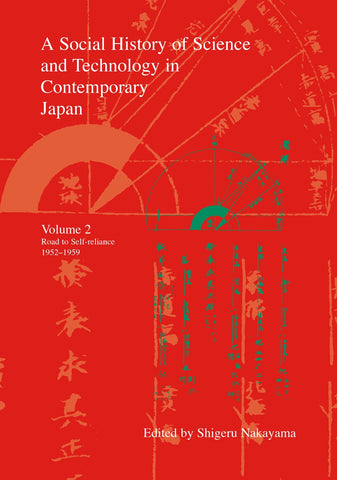
![Social History of Science and Technology Vol.2]() Social History of Science and Technology Vol.2Volume 2 of the four-volume A Social History of...Volume 2 of the four-volume A Social History of Science and Technology in Contemporary Japan examines the critical years from 1952 to 1959, when Japan sought to rebuild its scientific and technolog...
Social History of Science and Technology Vol.2Volume 2 of the four-volume A Social History of...Volume 2 of the four-volume A Social History of Science and Technology in Contemporary Japan examines the critical years from 1952 to 1959, when Japan sought to rebuild its scientific and technolog...